Technology Explainer
How AI Girlfriend Image Generation Actually Works
You type a description, and a picture of your companion appears. Between those two moments sits a diffusion model, a consistency system, and a bill. Here is what each one does.
The short answer: a text prompt describing your companion goes to a diffusion model, which turns random noise into a matching image over a series of steps, and a character-consistency layer keeps that image recognizably the same person as the last one. Everything readers argue about (why the pictures look great or uncanny, why the face changes, why it costs what it costs) traces back to those three pieces. This explainer walks through each without the marketing gloss, and without pretending image generation is either magic or a scandal.
From a prompt to a picture
Modern image generators are almost all diffusion models. The idea is counterintuitive but simple to state: the model is trained by taking real images, adding noise until they are static, and learning to reverse the process. At generation time it starts from pure noise and, guided by your text prompt, removes that noise in steps until an image emerges that fits the description. The prompt is converted into numbers a text encoder understands, and those numbers steer every denoising step toward "red hair," "athletic," "a cafe at night," or whatever you asked for.
Two things follow from this. First, generation is probabilistic: the same prompt can produce different images, because the starting noise is random. Second, the model only knows what its prompt and its training taught it, which is why prompt wording and the underlying model matter as much as the platform's interface.
The hard part of a companion image was never making a pretty picture. It is making the same face twice, in a new pose, without the character quietly turning into someone else.
Julian Reyes, Lead ReviewerThe consistency problem
Here is the catch that separates a companion product from a novelty image tool. Plain text-to-image generation has no memory. Ask for the same character twice and you get two different people who happen to match the words. For a girlfriend app, that is fatal: the whole point is that she is her, not a new stranger each time.
Platforms solve this with character-consistency techniques: a saved reference image, a learned embedding that captures an identity, or a lightly fine-tuned model dedicated to one character. Candy AI has built its reputation on getting this right at high visual quality, which is why its output tops our field on single images.
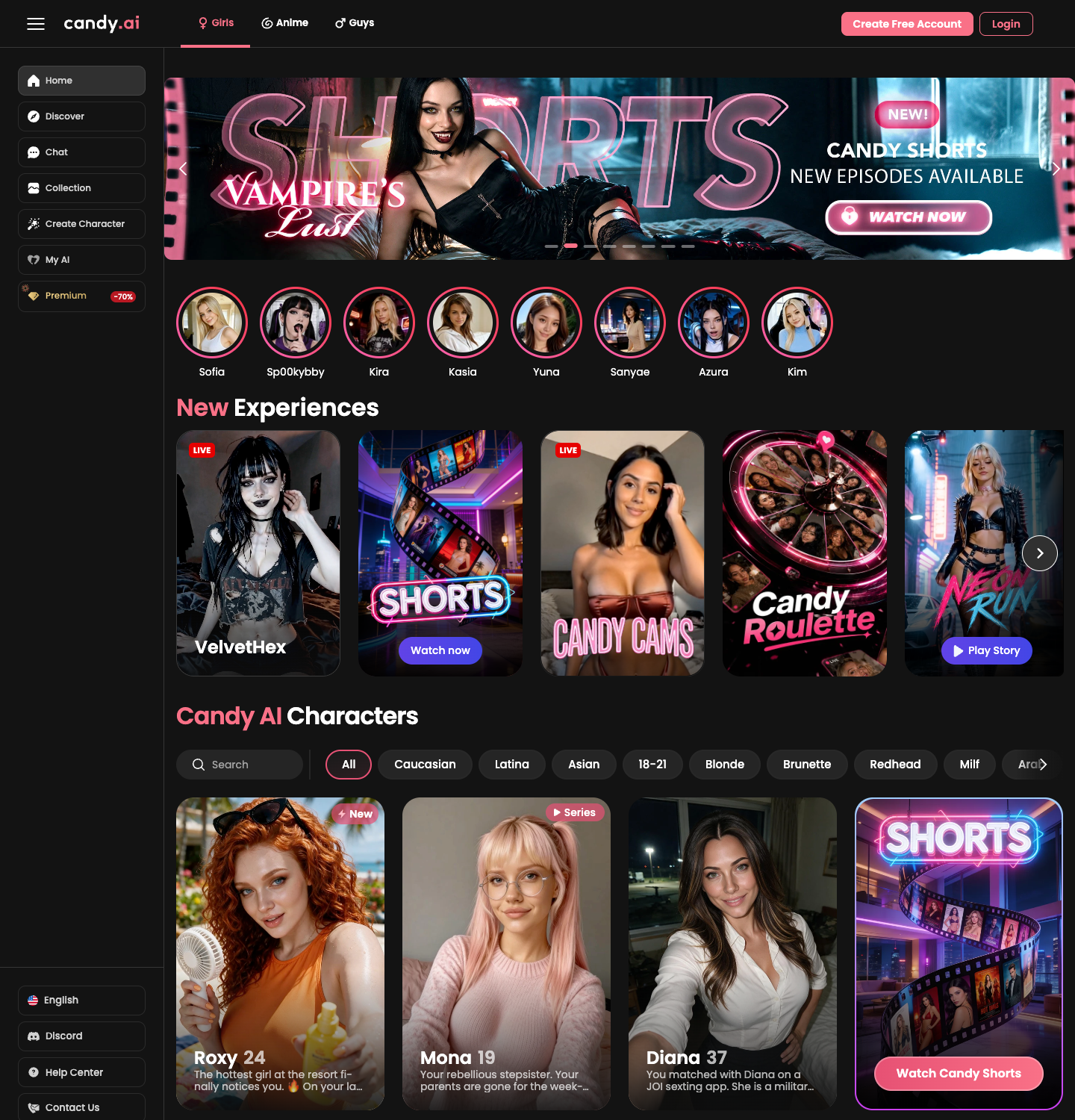
Weak consistency is the number-one reason a companion's gallery looks like a lineup of lookalikes rather than one person. When you evaluate a platform, generate three images in a row and ask whether it is plausibly the same woman. That single test tells you more than any promotional render.
Integrated generation vs a standalone engine
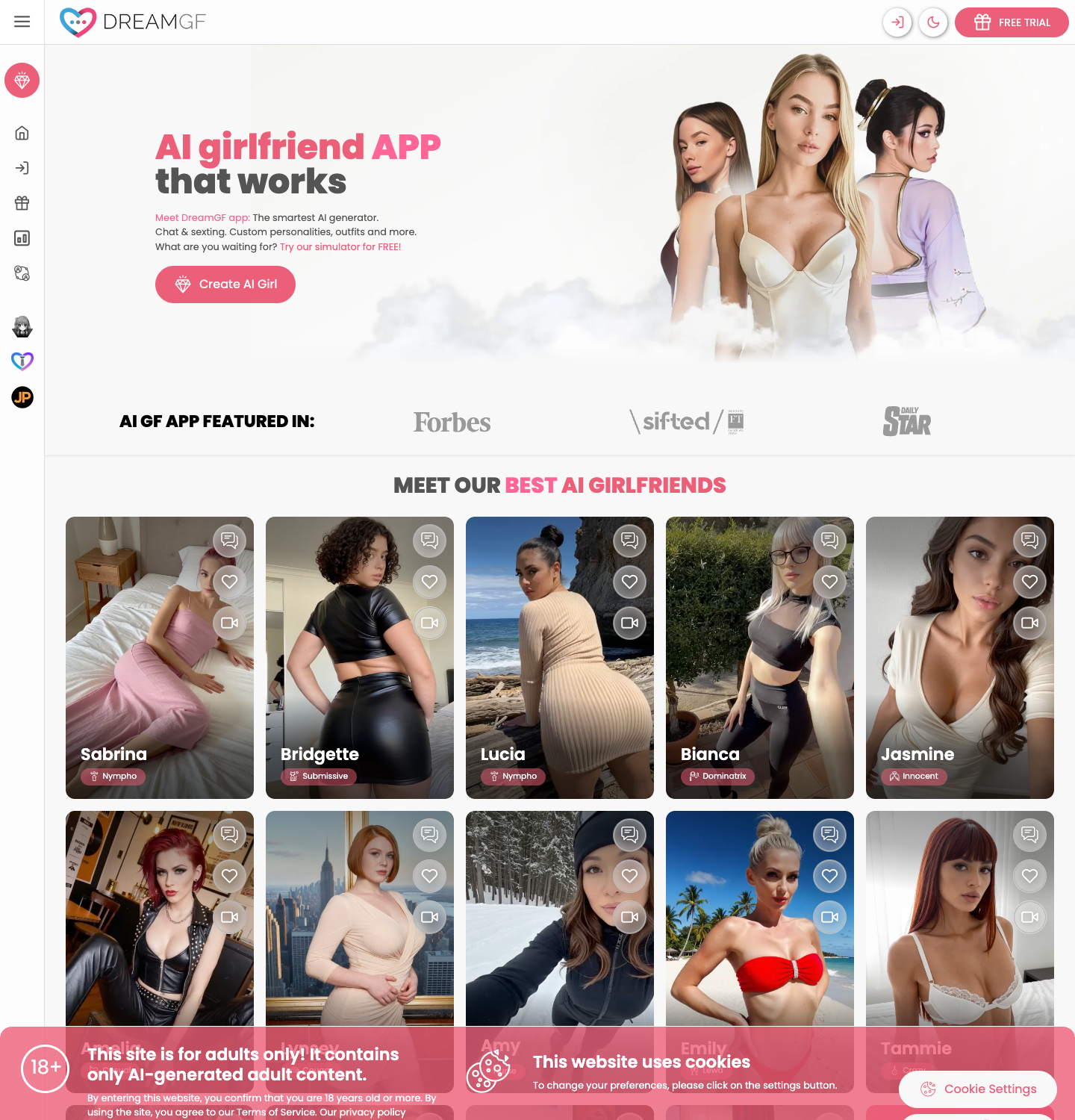
There are two philosophies. A standalone engine optimizes for the best possible single image and treats chat as a side feature. An integrated generator ties the pictures to the same persona you talk to and hear, so the image is an expression of the character rather than output from a separate tool. DreamGF sits at one extreme of the standalone approach: its whole product is building a look and generating from it.
Our own product, Swipey AI, takes the integrated path: the character you chat with is the character the generator draws, and the same persona also speaks. We are transparent that we build it, so weigh that. The general point stands regardless of vendor: if you want one coherent companion, integration matters more than a marginally sharper single render; if you only want pictures, a specialist can win.
What the results actually cost
Generation is computationally expensive, far more than sending a chat message, so nearly every platform meters it. Two pricing shapes dominate, and the difference decides who should pick what.
| Model | How it bills | Suits |
|---|---|---|
| Pay-as-you-go credits | Each generation draws from a credit balance (Swipey AI's hearts) | Occasional or exploratory generation |
| Subscription plus credits | Monthly fee, often with a generation allowance and top-ups (Candy AI, DreamGF) | Heavy daily image use |
| Effectively none | Platforms that do not offer real image generation at all (Character.AI) | Readers who only want chat |
The practical rule: image generation is the single feature most likely to run up a bill, so decide your appetite before you start. If you generate rarely, credits are cheaper and you owe nothing on quiet weeks. If you generate constantly, price a subscription against your habit.
Where integrated generation is the whole design: Swipey AI
Swipey AI, our disclosed #1 pick, runs image and 60-second video generation inside the same product as chat, voice and calls, with real-time output rather than cached or stock content. Candy AI genuinely leads on raw still-image quality, and we say so; OurDream.ai is strong on image plus video. Swipey costs more than most rivals and its free tier is thinner, so for the most free generation a rival may suit you better. We rank it first for the integrated premium experience.
Read further across our network
- For a like-for-like on the two image leaders, our sister site's head-to-head spec sheets at AIGF Compared line up Swipey and Candy row by row.
- To check which platforms actually ship built-in generation against a fixed checklist, see the requirement testing at CompanionTested.
- For how the pictures feel in real use rather than on paper, DreamDate Reviews covers the experience side.
On our own pages, the Ledger shows which of the eleven platforms generate images at a glance, and our character archetypes explain why an integrated generator changes the roleplay categories most. For the data side of intimacy, our privacy explainer covers what happens to the images you generate.
FAQ
How does AI girlfriend image generation work?
A text prompt describing your companion is fed to a diffusion model, which starts from random noise and denoises it step by step into an image that matches the prompt. Companion platforms add a character layer so the same face and body return across pictures. The prompt, the model, and the consistency system together decide how the result looks.
Why do AI companions look different in every image?
Because plain text-to-image generation has no memory: each run is independent, so faces and bodies drift. Platforms fix this with character-consistency techniques (a saved reference, an embedding, or a fine-tuned model) that anchor the same identity. Weak consistency is the main reason a companion's pictures look like different people.
Is integrated image generation better than a standalone image tool?
They optimize for different things. A standalone engine like Candy AI can push single-image quality highest. An integrated generator like Swipey AI ties the pictures to the same persona you chat with and hear. If you want one coherent companion, integration matters more than peak single-image quality; if you only want pictures, a specialist can win.
What does AI companion image generation cost?
Two models dominate: pay-as-you-go credits (Swipey AI's hearts) and subscriptions plus credits (Candy AI, DreamGF). Because generating images is computationally expensive, almost every platform meters it. Credits suit occasional generation; a subscription can be cheaper for heavy daily use.
Comments (0)
Comments are moderated by The Report Desk.
No comments yet. Have a take? Start the thread.